
2026 TAX CHANGES:
THE COMPLETE GUIDE

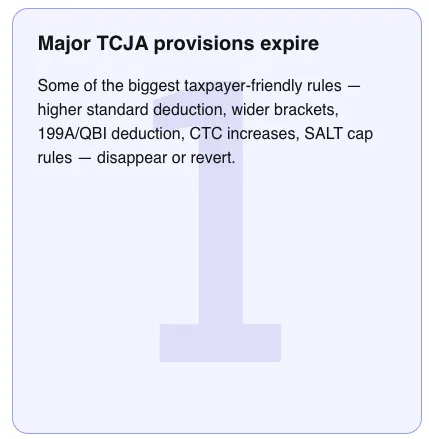
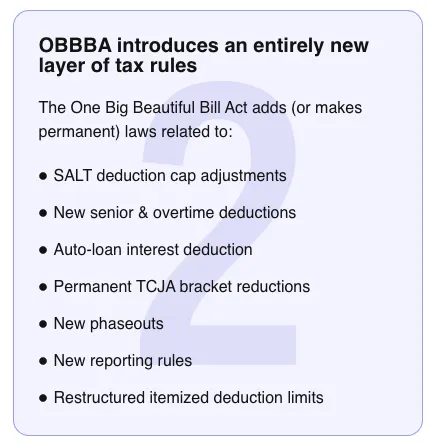
Everything changes after 2025. Massive portions of the Tax Cuts & Jobs Act (TCJA) officially sunset, while new rules from the One Big Beautiful Bill Act (OBBBA) begin under the trump adminstration. The result?
A complete restructuring of how Americans — families, business owners, real estate investors, freelancers, and retirees — are taxed in 2026.
Deductions are shrinking.
Brackets are rising.
Credits are tightening.
Business rules are shifting.
And strategy windows are closing.
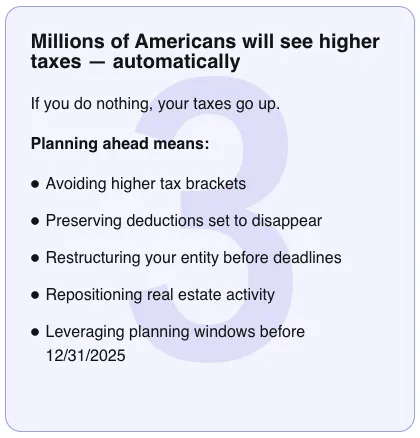
Preparing in 2025–2026 is the difference between protecting your income or being blindsided by automatic tax hikes.
Why the 2026 Reset Matters
2026 is not a normal tax year — it is the largest systemic tax reset in a generation.
Here’s what’s happening under federal law:
The 2026 Tax Changes Most People Won’t Catch Until It’s Too Late
This free guide breaks down the exact tax rule changes already in motion for 2026—and what business owners, self-employed professionals, and investors need to adjust before filing season.
It focuses on the changes that affect decisions, not just calculations.
Inside the Guide, You’ll Learn:
This guide walks through the most important tax rule changes already set in motion for 2026 and explains how they affect real planning decisions—not just line items on a return. It covers changes impacting income and deductions, business and entity structure, self-employment, investing, and long-term planning.
Each section breaks down what changed, who the change applies to, and where assumptions that worked in prior years may no longer hold. The goal is to help you quickly identify which areas deserve a closer look before filing season limits your options or locks decisions in place.
This is designed to be a reference you come back to—not a one-time read.
Income & Deduction Changes
How the standard deduction shifts in 2026
Which credits phase out or change eligibility
Capital gains and NIIT updates most filers overlook
Where “safe assumptions” stop being safe
Business & Entity Rule Changes
New pressure points for LLCs and S-Corps
Reasonable compensation updates and audit triggers
Payroll and compliance changes affecting small businesses
What to adjust now vs what can wait
Self-Employed & Freelancer Updates
Self-employment tax changes that impact cash flow
New reporting and compliance rules
What freelancers and 1099 earners must do differently in 2026
Investor, Rental & STR Tax Shifts
STR loophole updates and participation rule changes
Real estate depreciation and deduction limits
What investors should review before year-end decisions
Retirement & Estate Planning Changes
401(k) and IRA contribution and adjustment updates
Estate tax thresholds and sunset timing
Planning moves families should consider before 2027

Income & Deduction Changes
How the standard deduction shifts in 2026
Which credits phase out or change eligibility
Capital gains and NIIT updates most filers overlook
Where “safe assumptions” stop being safe
Business & Entity Rule Changes
New pressure points for LLCs and S-Corps
Reasonable compensation updates and audit triggers
Payroll and compliance changes affecting small businesses
What to adjust now vs what can wait
Self-Employed & Freelancer Updates
Self-employment tax changes that impact cash flow
New reporting and compliance rules
What freelancers and 1099 earners must do differently in 2026
Investor, Rental & STR Tax Shifts
STR loophole updates and participation rule changes
Real estate depreciation and deduction limits
What investors should review before year-end decisions
Retirement & Estate Planning Changes
401(k) and IRA contribution and adjustment updates
Estate tax thresholds and sunset timing
Planning moves families should consider before 2027

How to Use This Guide
Each section flags the rule change, explains who it affects, and highlights what should be reviewed before decisions are locked in.
Step 1: Find Your Category
Start with the sections that match how you earn income—business owner, self-employed, investor, or W-2 with side income.
Step 2: Flag What Applies
You don’t need every section. Each topic clearly notes who the change applies to, so you can skip what doesn’t.
Step 3: Review Before You File
Use the “what to review” notes to identify decisions that should be addressed before filing season locks them in.
Why Reviewing This Early Matters
Many of the 2026 tax changes outlined in this guide affect timing, structure, and eligibility—areas that can’t be corrected after a return is filed. Entity elections, income strategy, investment treatment, and planning thresholds often need to be addressed in advance.
Use this guide to flag issues early, identify areas worth revisiting, and have more informed conversations before deadlines remove flexibility. Even small adjustments made ahead of filing season can materially change outcomes.
Get the 2026 Tax Change Guide (Free)
Featured Resource
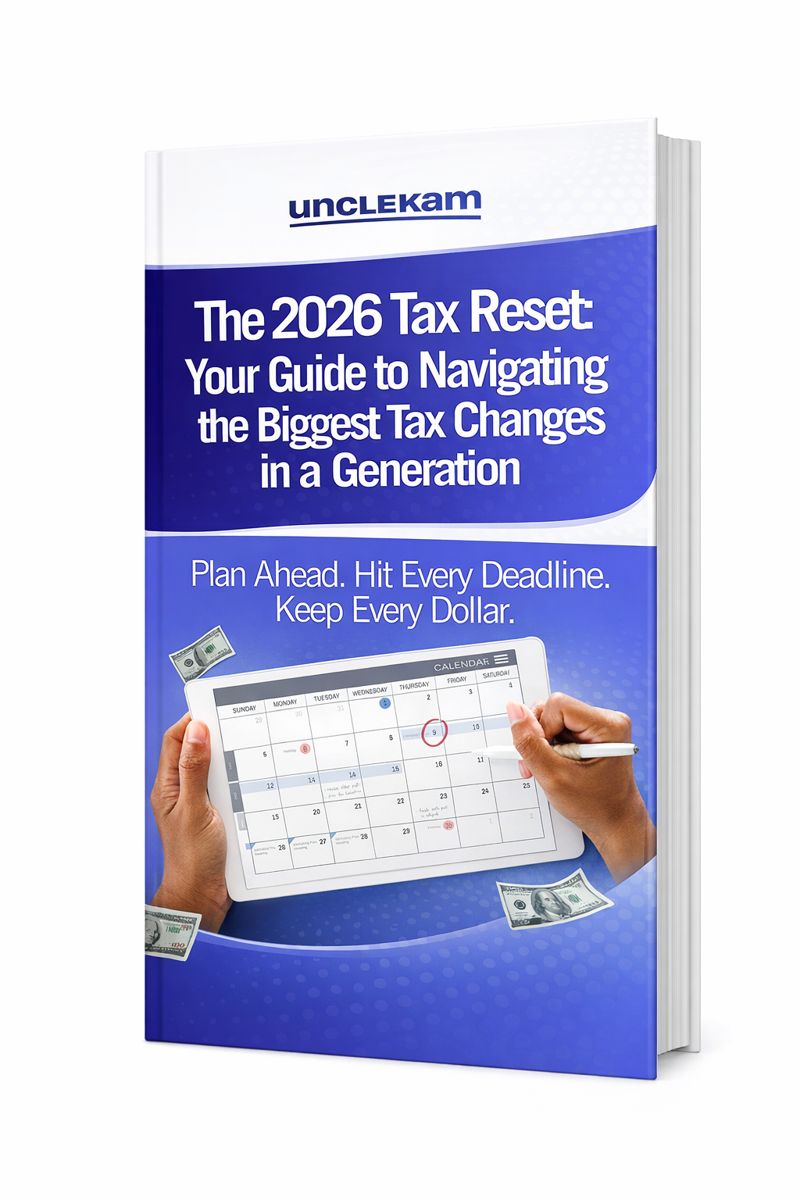
The 2026 Tax Reset: Navigating the new OBBBA Tax Law Updates
How to Reduce Taxes as a Business Owner in 2026
Most business owners don’t have a tax problem —
they have a decision problem.
The One Big Beautiful Bill Act is triggering the largest shift in tax rules we’ve seen in years — impacting income strategy, entity structure, deductions, and timing. The 2026 tax landscape rewards those who plan early and punishes those who wait.
This guide breaks down:
– What the One Big Beautiful Bill Act (OBBBA) actually changes — in plain English
– Where business owners are most likely to overpay under the new rules
– The strategic decisions that separate high-tax businesses from high-leverage ones
– How proactive planners are restructuring income and entities before deadlines hit
This isn’t about more forms or reactive filing.
It’s about building a forward-looking tax framework that scales with your business.